
Aluminium Bathroom Door Designs: What to Look for in Moisture Resistance, Privacy, and Finish
May 18, 2026
Why do bathroom doors fail faster than other doors in the house?
It usually starts small. A slight swelling near the bottom. A loose hinge. A finish that no longer looks even. Most homes notice it only after repeated repairs.
Bathrooms stay exposed to moisture every day. Steam builds up quickly. Water reaches corners. Ventilation is not always consistent. Over time, the door takes the impact.
This is where aluminium bathroom door designs have become relevant in modern homes. They handle moisture better, stay stable, and require less upkeep. But choosing the right one still matters. The performance depends on moisture resistance, privacy level, finish quality, and the type of aluminium door system used.
Why Aluminium Is Becoming a Preferred Material for Bathroom Doors?
1. Does not absorb moisture
Aluminium stays stable in humid bathroom conditions without swelling or warping.
2. Corrosion-resistant
It does not rust easily, even with daily exposure to steam and water.
3. Dimensionally stable
The frame and shutter maintain shape over long-term use without expansion issues.
4. Works in compact spaces
Lightweight profiles allow slim aluminium door designs suitable for small bathrooms.
5. Low maintenance
No repainting or polishing required; simple cleaning is enough.
6. Supports multiple design options
Compatible with glass, solid panels, and mixed infill aluminium door systems.
7. Performs in Indian climate conditions
Handles humidity, monsoon exposure, and temperature variation effectively.
8. Long operational life
Consistent performance with fewer repairs or replacements over time.
Moisture Resistance: The Most Important Factor in Bathroom Door Selection
Bathrooms create constant moisture exposure. Steam after showers. Water splashes near the door. Humidity is trapped inside the room.
If the material reacts to this environment, problems begin.
Aluminium avoids this because it does not absorb water. The structure stays stable. No swelling. No warping. No surface breakdown.
Surface coating plays a role, too.
- Powder coating adds a protective layer against moisture and stains
- Anodised finishes improve surface strength and corrosion resistance
Installation matters as well. Even good aluminium doors fail if the sealing is weak or the alignment is incorrect. Water seepage at the base or edges reduces performance over time.
Ventilation also affects durability. Poor airflow keeps moisture trapped longer, which increases the load on all bathroom materials, including doors.
Privacy in Aluminium Bathroom Door Designs
Privacy in bathrooms works on two levels, such as visual and acoustic.
Aluminium systems support both through different infill options and door styles.
- Glass Options
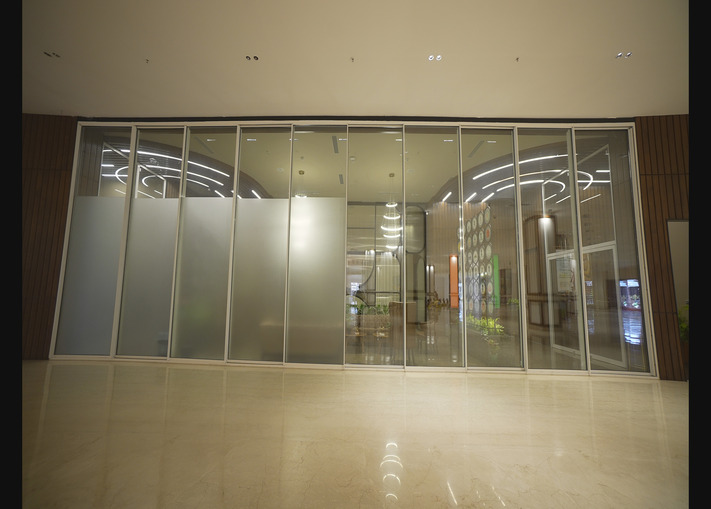
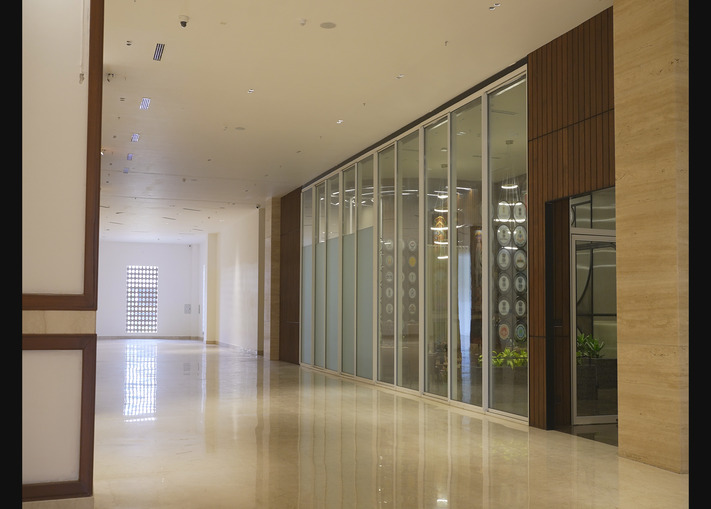
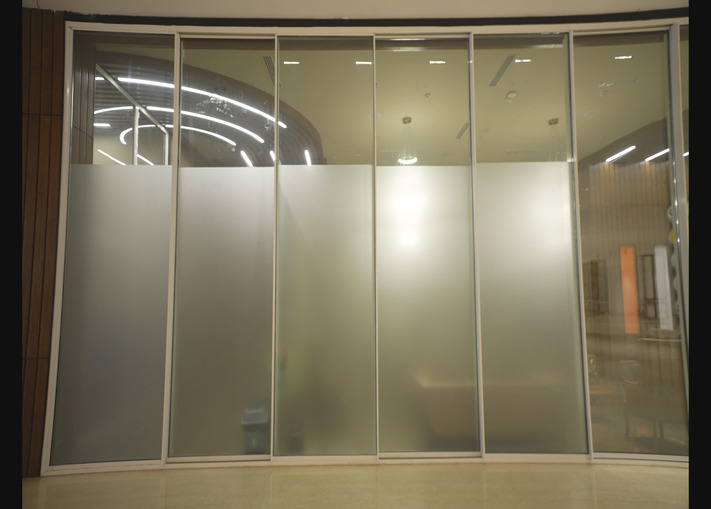
- Frosted glass blocks direct visibility
- Textured or reeded glass reduces clarity while allowing light flow
- Solid panels provide full visual privacy
- Acoustic Aspect
Proper sealing in aluminium door systems reduces sound transfer between spaces. This becomes important in bedrooms attached to bathrooms.
Door Types for Privacy:
1. Casement doors
- Tight closure
- Better sealing
- Suitable for larger bathrooms
2. Sliding doors
- Saves space
- Works in compact layouts
- Clean separation between spaces
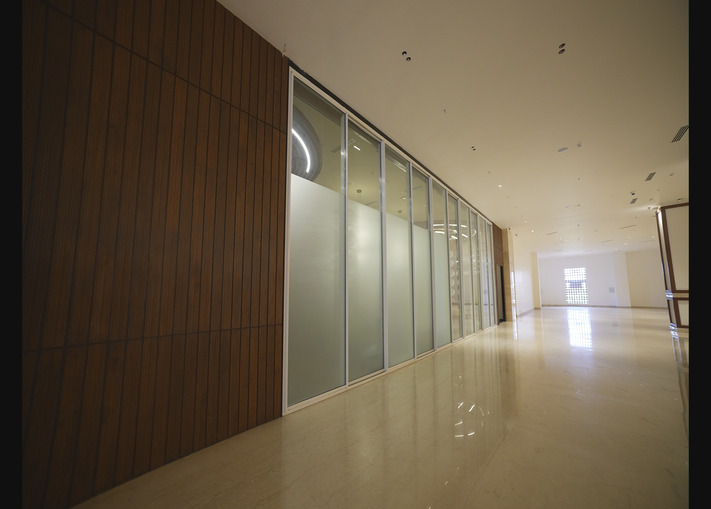
3. Slide & fold doors
- Flexible opening
- Useful for connected bathroom and wardrobe areas
Types of Aluminium Bathroom Door Designs and Where They Work Best
Every bathroom layout functions differently, so the right aluminium door design depends heavily on available space, movement flow, and the overall interior approach.
1. Casement Aluminium Bathroom Doors
Casement systems continue to remain relevant because they are simple, durable, and easy to operate.
Their stronger closure mechanism also improves sealing performance, making them suitable for master bathrooms and larger family-use spaces.
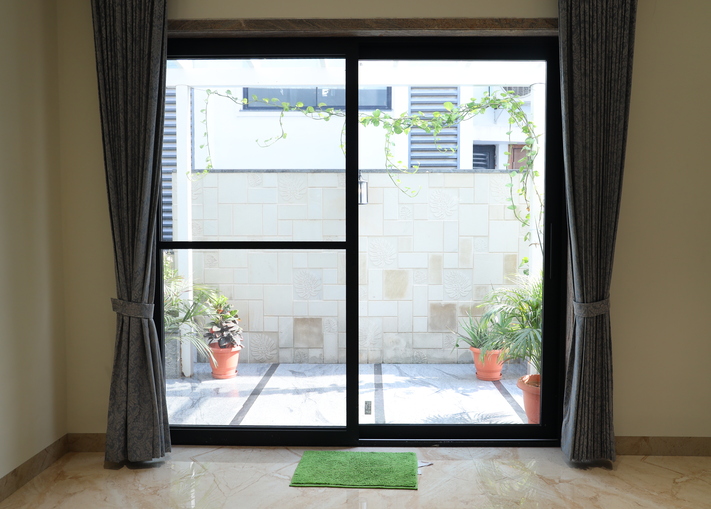
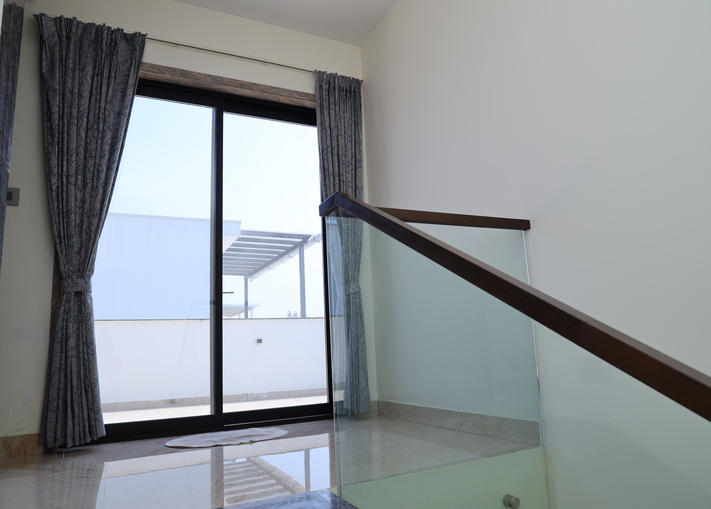
2. Sliding Aluminium Bathroom Doors
Sliding systems naturally suit compact apartments.
Since they operate horizontally, they help save circulation space inside smaller bathrooms.
Their slim profile also helps the interiors feel more open and less cluttered.
3. Slimline Sliding Doors
Slimline sliding aluminium doors create a much lighter visual appearance because the frames remain extremely narrow.
Larger glass sections improve light flow and make the bathroom feel visually connected to surrounding spaces.
Luxury homes often use these systems in spa-inspired layouts or semi-open bathroom concepts.
4. Slide & Fold Doors
Slide and fold systems work well in spaces that need flexible partitioning. The panels fold neatly while still allowing wider access whenever required.
5. Lift and Slide Doors
Lift and slide systems are generally better suited for larger openings.
In residential settings, they are commonly used in premium villas where bathrooms connect directly to landscaped decks or private outdoor spaces.
Despite the larger panel sizes, the movement remains smooth and controlled, which enhances the overall experience.
6. Fixed Glass and Door Combinations
Fixed glass sections paired with aluminium doors help improve natural light flow while maintaining a cleaner design language.
These combinations make bathrooms feel visually larger without affecting functionality.
Choosing the Right Finish for Aluminium Bathroom Doors
The finish decides how the bathroom door will look after years of daily use, not just on installation day.
Bathrooms expose surfaces to constant humidity, so poor coatings become noticeable quickly. Fading, uneven textures, or visible surface marks can affect the entire look of the space.
Powder-coated aluminium remains one of the most practical choices for residential bathrooms. It resists moisture and everyday wear effectively while offering multiple textures and colour options for better design coordination.
Anodised finishes create a sharper metallic appearance and improve surface durability further. Many urban homes prefer this finish because it looks refined without appearing excessive.
Matte finishes continue gaining popularity for another reason. They minimise visible smudges and water marks, helping the surface appear cleaner during everyday use.
Wood-finish aluminium systems offer warmth without bringing the maintenance issues associated with natural timber. Homeowners looking for softer interior palettes often prefer this option.
Colour selection should also connect naturally with the rest of the bathroom design. Black, charcoal grey, bronze, white, and muted metallic shades remain widely used because they work across both modern and transitional interiors.
Additional Factors to Consider Before Finalising a Bathroom Door
1. Hardware Quality
Handles, hinges, rollers, and locks must resist corrosion. Bathrooms expose hardware to moisture daily.
2. Ease of Cleaning
Aluminium surfaces are non-porous. Simple wiping is enough for maintenance.
3. Space Planning
Door type should match bathroom size. Sliding for compact spaces. Casement for larger ones.
4. Installation Quality
Incorrect fitting affects sealing, movement, and durability. Alignment is critical.
Why Aluminium Bathroom Doors Align With Modern Residential Design?
Residential interiors today feel lighter, cleaner, and more functional than before. Bulky elements no longer fit naturally into modern layouts.
Aluminium supports this shift effortlessly because the profiles remain slim while still offering structural strength. Designers can combine glass, textured panels, and solid finishes more freely without making the space appear visually heavy.
The material also adapts across different residential styles. Apartments, villas, premium homes, and hospitality-inspired interiors all use aluminium door systems differently depending on the architectural direction.
What keeps aluminium relevant is its ability to balance performance with aesthetics. It handles moisture-heavy conditions reliably while still supporting contemporary design expectations.
Conclusion
Bathroom doors face constant exposure to moisture and daily use. That makes material selection critical.
Aluminium bathroom door designs solve this with stability, low maintenance, and design flexibility. The system performs well in humid conditions and supports multiple layouts and finishes.
The final performance still depends on correct selection, such as moisture resistance, privacy planning, finish quality, and proper installation, all of which matter.
As one of the leading aluminium doors & windows providers, Alteza was developed with a focus on durability, precision, and architectural integration. The aim is simple: to build premium solutions that work in real conditions, not just on paper.
FAQs
Q1. Are aluminium bathroom doors suitable for hard water areas?
A. Yes, aluminium doors perform well in hard water conditions because the material does not absorb moisture or develop surface damage easily. Choosing a good-quality powder-coated or anodised finish also helps reduce visible water marks and staining.
Q2. Can aluminium bathroom doors be customised for small or irregular openings?
A. Aluminium door systems can be customised in terms of size, profile thickness, glass type, and opening style. This makes them suitable for compact bathrooms, corner layouts, and non-standard openings.
Q3. Do aluminium bathroom doors support ventilation without compromising privacy?
A. Yes. Aluminium systems can include ventilation sections, frosted glass, or textured panels that improve airflow while maintaining privacy inside the bathroom.
- 10 Modern Aluminium Sliding Door Designs for Living Rooms, Balconies & Villas
- Double Glazing vs Single Glazing: Which Should You Choose for Aluminium Windows?
- Are Aluminium Doors Safe for Homes? Security Features to Look For: Locks, Glass, Frames
- Why choose Alteza Aluminium windows and doors? End-to-end service & 10 years of warranty
- 10 Best Roof Railing Design Ideas for a Modern & Royal Home



Related Posts

How to stop condensation on windows? Useful tips by one of the leading aluminium window manufacturers
Condensation occurs when warm air carrying moisture comes into contact with a cold surface, such as a window pane. This contact causes the water vapor...

Enjoy calm indoors with aluminium noise proof windows
As urban living increases at a rapid rate, high noise levels are adversely impacting the lives of several people every day. Constant exposure to loud...
Why Aluminium Sliding Doors Are the Smartest Upgrade for Modern Homes
With 36% of India’s population living in urban areas in 2025, according to the World Bank and the UN Population Division’s World Urbanisation Prospects, homes...

Why aluminium windows and doors are ideal for Indian homes
India’s harsh weather conditions, diverse landscapes, and unique functional needs call for careful consideration while selecting the materials to use in constructing your home. While...

Choosing the Right Glazing for Premium Aluminium Windows: Single vs Double Glazing Explained
Confused between single and double glazing? Learn how glazing impacts comfort, energy efficiency, and noise control in premium aluminium windows, and choose the right option...

5 Reasons you need new aluminium windows & doors
Are you considering your options for the right material for your doors and windows? Allow us to make the case for aluminium. Aluminium is also...