Single Track vs Multi-Track Aluminium Sliding Windows: A Practical Comparison
February 16, 2026
Aluminium sliding windows have become a preferred choice for modern homes, apartments, and villas across India. Their clean lines, space-saving operation, and durability make them suitable for both compact urban homes and expansive residential layouts.
While homeowners often focus on glass type, frame finish, or colour, one critical aspect that is frequently overlooked is the track configuration.
The number of tracks in an aluminium sliding window system directly affects ventilation, usability, maintenance, weather performance, and overall comfort. Choosing between a single-track and a multi-track system is not about opting for a basic or premium option; it is about selecting the right solution for how a space is actually used.
This article offers a practical, real-world comparison of single track and multi-track aluminium sliding windows, helping homeowners and designers make the right decisions based on function rather than assumptions.
How Aluminium Sliding Windows Work: The Role of Tracks and Panels?
An aluminium sliding window operates by moving one or more glass panels horizontally along a track instead of swinging inward or outward. Each glass panel, also called a sash or shutter, sits on rollers that glide along a precision-engineered aluminium track.
The track is the guiding rail system fixed into the window frame. The number of tracks determines how many panels can move independently and how much of the window opening can be used at a time. Aluminium is particularly well-suited for sliding systems because of its strength-to-weight ratio, allowing slim profiles while supporting large glass panels smoothly and safely.
Once you understand this basic mechanism, it is easier to see why track configuration plays such a major role in performance.
What Is a Single Track Aluminium Sliding Window?
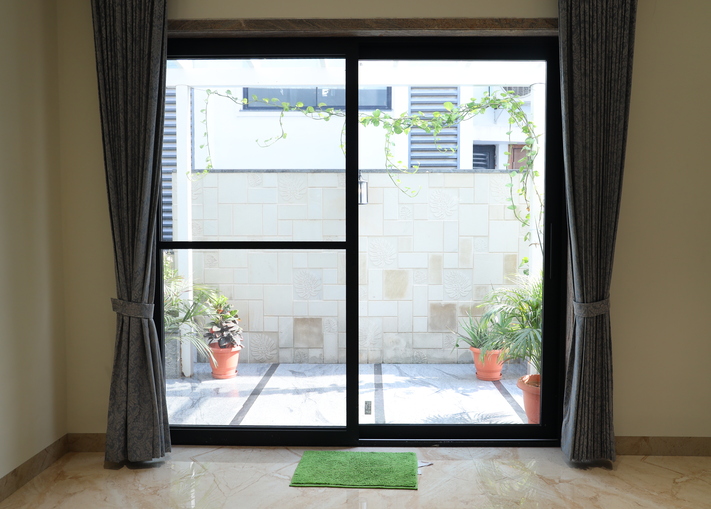
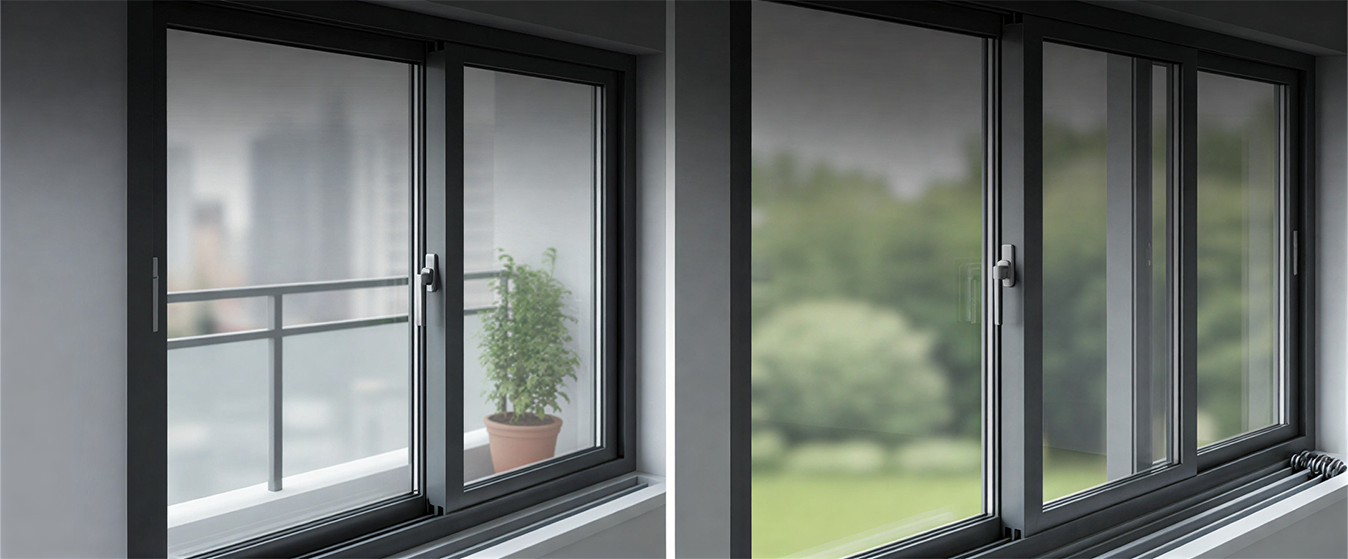
A single track aluminium sliding window consists of one fixed glass panel and one movable panel operating on a single rail. Only one shutter slides, while the other remains stationary at all times.
This configuration typically allows around 50 percent of the window opening to be used for ventilation. The fixed panel offers a clear, uninterrupted view, while the sliding panel provides controlled airflow.
Single-track aluminium sliding windows are commonly used in:
- Bedrooms
- Kitchens
- Bathrooms
- Compact apartments
Their simple structure means fewer moving parts, which often translates to lower maintenance and more consistent sealing. From a visual perspective, they support a clean and minimal sliding aluminium window design, making them suitable for modern interiors where subtlety matters.
What Is a Multi-Track Aluminium Sliding Window?
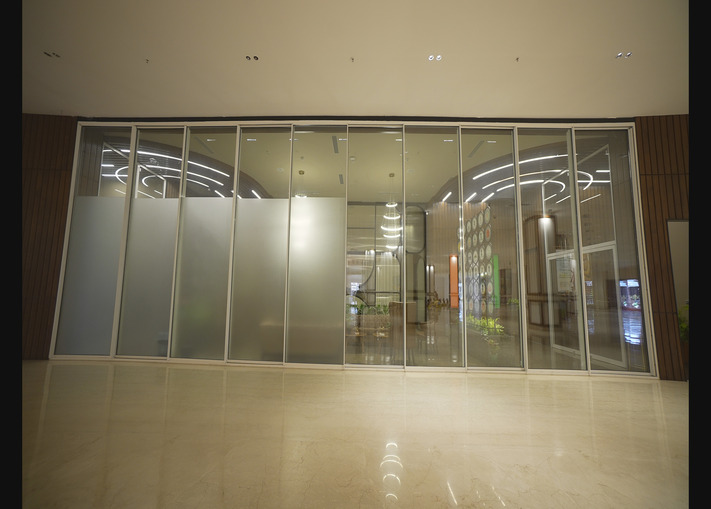
Multi-track aluminium sliding windows use two or more parallel tracks to allow multiple glass panels to slide independently. The most common configurations include 2-track, 3-track, and larger custom systems, depending on the opening width.
In a 3-track aluminium sliding window, for example, three panels can move across separate rails, allowing greater flexibility in how the window is opened. Multi-track systems can also accommodate additional elements such as mesh panels or flyscreens without compromising ventilation.
These systems are widely used in:
- Living rooms
- Balcony-facing windows
- Large openings in villas
- Premium residential projects
Multi-track systems are designed to maximise opening width and airflow while maintaining the sleek appearance expected from modern aluminium sliding windows.
Single Track vs Multi-Track Aluminium Sliding Windows: A Practical Comparison
Ventilation and Airflow Control
Ventilation is one of the most noticeable differences between single and multi-track systems. Single-track windows allow airflow from only one side, which is sufficient for smaller rooms or spaces with limited ventilation needs.
Multi-track aluminium sliding windows offer greater control. Multiple panels can be opened partially or fully, allowing airflow from different sections of the opening. This flexibility becomes especially valuable in larger rooms or in climates where natural ventilation plays a key role in indoor comfort.
Opening Size and Usable Access
With a single track system, the usable opening is limited to half the total window width. This works well in rooms where windows are used primarily for light and basic airflow.
Multi-track systems allow a larger effective opening, especially in wide spans. A 3-track aluminium sliding window can open up two-thirds of the window area, making it ideal for spaces that connect visually or physically with balconies, gardens, or terraces.
However, a larger opening is not always necessary. The choice depends on how frequently the window is used for access or ventilation.
Energy Efficiency and Sealing Performance
Energy efficiency depends more on sealing quality and installation precision than on track count alone. Single-track aluminium sliding windows often perform slightly better in this area because they have fewer moving joints and interlocks.
Multi-track systems involve additional panels and meeting points, which require high-quality weather seals and accurate alignment. When designed and installed properly, both systems can deliver excellent thermal and acoustic performance.
The key factor is not whether the system is single or multi-track, but how well it has been engineered.
Design, Sightlines, and Visual Appeal
Single-track systems provide a cleaner visual appearance with fewer vertical divisions. The fixed panel offers an uninterrupted glass surface, which works well for minimalist interiors.
Multi-track systems introduce additional meeting rails between panels. While this slightly alters sightlines, modern aluminium profiles are designed to remain slim and visually balanced. For wide openings, the flexibility offered by multi-track systems often outweighs the minor change in visual continuity.
Both configurations support contemporary sliding aluminium window design when executed thoughtfully.
Ease of Use, Cleaning, and Maintenance
Single-track aluminium sliding windows are simple to operate and easy to maintain. With fewer tracks, there is less dust accumulation, and routine cleaning is straightforward.
Multi-track systems require slightly more attention, as additional tracks can collect dust and debris over time. However, they offer an advantage in cleaning accessibility. In many multi-track designs, movable panels allow the exterior glass to be cleaned from inside the home, which is particularly helpful in high-rise buildings.
Long-term performance in both systems depends on roller quality, track finish, and regular basic maintenance.
Drainage, Weep Holes, and Monsoon Performance
In regions that experience heavy rainfall, drainage design becomes critical. Aluminium sliding windows rely on integrated drainage channels and weep holes to direct water away from the frame.
Multi-track systems generally provide better water management because multiple tracks allow for more drainage points. This makes them more forgiving during heavy or wind-driven rain.
Single-track systems can also perform well in monsoon conditions when properly designed, but they rely more heavily on precise installation and sealing. Regardless of track count, poor drainage detailing can compromise performance.
Cost and Value Comparison: What Are You Really Paying For?
Single-track aluminium sliding windows are typically more cost-efficient. They use fewer components, require simpler fabrication, and are easier to install. This makes them a practical choice for projects with tighter budgets or smaller openings.
Multi-track systems involve additional profiles, hardware, and installation depth. While the initial investment is higher, they deliver added flexibility, larger openings, and improved usability in suitable spaces.
When comparing costs, it is important to look beyond upfront pricing and consider how the window will be used over time.
Which Sliding Window System Fits Your Home Best?
Choosing between single and multi-track aluminium sliding windows depends on how the space functions.
Single-track systems are well-suited for:
- Bedrooms and bathrooms
- Kitchens with limited wall space
- Compact apartments
- Homes prioritising low maintenance
Multi-track systems are better suited for:
- Living rooms and family spaces
- Balcony-facing openings
- Large villas or premium residences
- Homes that rely on natural ventilation
Climate, room size, and usage patterns should guide the decision rather than trends alone.
Common Misconceptions About Track Systems
A common assumption is that more tracks automatically mean better performance. In reality, a poorly installed multi-track system can underperform compared to a well-designed single track window.
Another misconception is that single-track systems are outdated. They continue to be widely used because they offer reliability, clean aesthetics, and efficient operation when applied correctly.
Performance is shaped more by design quality than by the number of tracks.
Why Fabrication and Installation Matter More Than Track Count?
Even the best aluminium sliding window design can fail if fabrication and installation are not executed precisely. Accurate alignment, quality hardware, proper sealing, and correct drainage all play a decisive role.
This is where experienced aluminium sliding window manufacturers stand apart. Precision engineering ensures that both single and multi-track systems deliver consistent performance over time.
Wrapping Up
Single-track and multi-track aluminium sliding windows each serve a clear purpose. Neither is universally better; the right choice depends on space, usage, and expectations. When selected thoughtfully and installed correctly, both systems can provide better comfort, ventilation, and visual appeal.
At Alteza, aluminium sliding window systems are designed with a focus on precision engineering, functional design, and long-term performance. By offering thoughtfully crafted solutions suited to Indian homes and climates, we help homeowners to choose sliding window systems that are practical, durable, and aesthetically refined.
FAQ’s
Q1. Is a multi-track aluminium sliding window always better than a single-track system?
A. It depends on the requirement. Multi-track windows offer larger openings and better airflow, while single-track systems perform equally well in smaller rooms. The right choice depends on room size, ventilation needs, and everyday usage.
Q2. Which sliding window system is easier to maintain in the long run?
A. Single-track aluminium sliding windows are generally easier to maintain because they have fewer tracks and moving parts. Multi-track systems may need slightly more cleaning, but quality hardware and regular maintenance keep them performing smoothly.
Q3. Do multi-track aluminium sliding windows work better during heavy rain?
A. Multi-track systems usually handle heavy rainfall better due to multiple drainage paths and weep holes. However, both single and multi-track windows can perform well in monsoon conditions when properly designed and installed.
- 10 Best Roof Railing Design Ideas for a Modern & Royal Home

- 10 Premium Aluminium Window Designs to Upgrade Your Home This Festive Season
- 7 Things to Check Before Buying Aluminium Windows for Your Home
- Benefits of Aluminium Casement Doors for Residential and Commercial Spaces
- Why Aluminium Sliding Doors Are the Smartest Upgrade for Modern Homes

Related Posts

Luxury interiors: Pairing aluminium windows with wood finishes
Are you looking to add a touch of luxury to your interiors? Aluminium windows paired with wood finishes bring a unique blend of luxury and...

When To Replace Aluminium Windows With New Ones?
About Aluminium windows Aluminium is an excellent material for making windows since it has numerous properties that contribute to the sustainability of your home. Whether...

What Factors Should You Consider When Choosing Aluminium Windows for Homes?
Choose the right aluminium windows for homes by understanding key factors like durability, insulation, design, weather resistance, and long-term performance benefits.
Comparing UPVC, wooden, and aluminium doors: Which is the best choice?
One of the first decisions to be made when selecting a new or replacement door is the material that has to be chosen. Out of...

Top Aluminium Window Design Trends for Urban Apartments in 2025
From integrated grills to automation-ready systems, explore top aluminium windows design trends that redefine safety, space, and style for Indian apartment living.
Upgrade Your Home with Aluminium Windows and Mosquito Nets
Want to keep your windows open for fresh air without letting mosquitoes and insects into your home? Aluminium windows with mosquito nets can help you...