
Aluminium Ventilator Windows for Bathrooms and Kitchens: Types, Sizes and Where to Use Them
November 5, 2026
Bathrooms and kitchens need good ventilation. Bathing releases steam into the air, while cooking produces heat, fumes and lingering odours. If these remain trapped indoors, the rooms can feel stuffy and moisture may collect on walls, ceilings and other surfaces.
Aluminium ventilator windows help release humid air and allow fresh air to enter. Their compact designs also work well in spaces where a full-sized window may not fit.
The type of ventilator, its size and its position all affect how well it performs. Understanding these details can help homeowners select a window that suits the room and its everyday use.
Why Do Bathrooms and Kitchens Need Ventilator Windows?
In bathrooms, ventilation helps remove steam after a shower or bath. Without a suitable outlet, moisture can linger and lead to condensation on mirrors, walls and ceilings.
Kitchens have a different set of ventilation needs. Cooking releases heat, smoke and food odours, which can spread into adjoining rooms if the air has no clear exit. A well-positioned window helps release this stale air and brings in fresh air. It can also improve natural lighting.
An aluminium ventilation frame is well suited to these spaces because aluminium handles moisture exposure and needs relatively little upkeep. The window’s performance, however, also depends on its design, hardware, sealing and installation.
Types of Aluminium Ventilator Windows
Different window designs offer varying levels of airflow, privacy and control. The following options are commonly considered for kitchens and bathrooms.
1. Louvered Ventilator Windows
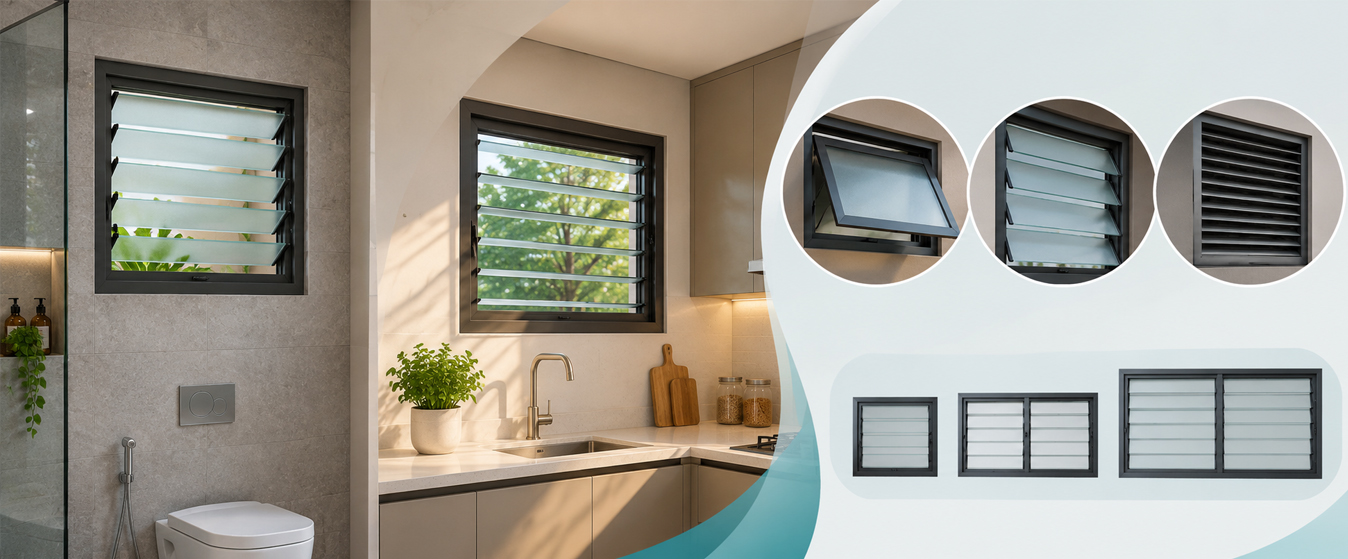
Louvered windows have angled blades that allow air to pass through while offering some control over direct visibility. They suit bathrooms and kitchens where ventilation is needed without a large window opening. The actual airflow depends on the blade design, spacing and free opening area.
They are available in two main types:
- Fixed louvers: The blades remain in one position and provide a permanent passage for air.
- Movable louvers: The blades can be adjusted to regulate airflow as required.
Before installation, check the blade angle and spacing, particularly if the window faces another building. Privacy can vary depending on the position of the louvers.
2. Top-Hung Ventilator Windows
Top-hung windows have hinges along the upper edge and open outwards from the bottom. Their outward-opening design allows air to circulate and may offer some protection against light rain, depending on the opening angle, weather conditions and window design.
They work well in bathrooms and kitchens that need a compact, operable window. However, strong winds or horizontal rain can still carry water indoors. Close the window during severe weather.
3. Fixed Ventilator Windows
Fixed windows do not open and therefore cannot provide ventilation through the window itself. Their main purpose is to bring natural daylight into a room.
They can be installed alongside an exhaust fan or another openable window. If airflow is the main requirement, a fixed glass panel alone will not meet that need.
4. Combination Ventilator Windows
Combination windows include both fixed glazing and an openable section. The fixed portion brings in natural light, while the movable section allows air to circulate.
This arrangement suits rooms where homeowners need daylight and ventilation but don’t want the entire window opening to be operable.
How to Select the Right Ventilator Window Size
A single standard size will not suit every bathroom or kitchen. The required dimensions depend on the room’s size, ceiling height, moisture or heat levels, available wall space and ventilation route.
Keep these points in mind while assessing ventilator window sizes:
- Room dimensions: Larger bathrooms and kitchens may need a greater ventilation opening than smaller spaces.
- Usable opening area: Frames, blades and insect mesh reduce the actual area through which air can pass.
- Available wall space: Measure the opening and account for pipes, cabinets and other fittings that may obstruct it.
- Airflow route: The window should support a clear path for air to enter and leave the room.
- Ease of access: Handles and movable blades should remain within comfortable reach.
Do not assess a window only by its outer frame dimensions. Ask the supplier or installer about the actual free opening area and whether it can provide sufficient ventilation for the room.
Where to Install Aluminium Ventilator Windows
Even a well-designed window may not perform as expected if its position restricts airflow. Placement should account for the room layout, privacy and exposure to rain.
1. Bathrooms
A high-level opening on an external wall is a common arrangement. Aluminium bathroom ventilator windows allow humid air to escape while keeping the window away from direct eye level.
For bathrooms with a shower area, plan the airflow route so moisture can move towards the outlet. If the window faces an internal shaft, check whether the shaft itself has adequate ventilation. A poorly ventilated shaft can limit the amount of air passing through the window.
Bathrooms without an external opening may require a mechanical exhaust system to remove humid air.
2. Kitchens
A kitchen ventilator window is generally placed on an external wall where it can support the movement of cooking fumes and warm air outdoors.
Check that overhead cabinets and other fittings do not obstruct the opening. The window can support natural ventilation, while a kitchen chimney or exhaust fan provides mechanical extraction of cooking fumes, grease and heat. The two systems serve different purposes and may be used together depending on the kitchen layout and ventilation requirements.
Factors to Consider Before Buying
Before selecting aluminium ventilator windows, review the details that affect everyday use:
- Privacy: Frosted or textured glass and suitably angled louvers help restrict outside visibility.
- Rain protection: Check the opening design, drainage and weather protection for the conditions around your home.
- Insect mesh: A suitable mesh helps keep insects out, but its effect on airflow should also be considered.
- Ease of operation: Handles, hinges and movable blades should be easy to reach and operate.
- Frame finish: Select a finish that complements the room’s windows, fittings and interiors.
- Installation: Accurate measurements, secure fixing and proper sealing around the frame help prevent unwanted water entry and air gaps.
An aluminium window with ventilation should meet the room’s practical requirements while fitting the available wall space and the overall design.
Conclusion
Aluminium ventilator windows help improve airflow in kitchens and bathrooms, where steam, heat and odours build up through daily use. Louvered, top-hung and combination designs serve different needs, while fixed glazing is mainly suited to spaces that require more daylight.
Room dimensions, wall openings, privacy and the available ventilation route should guide the selection. Frame quality and proper installation also deserve attention, as both influence the window’s performance over time.
FAQs
Q1. What are aluminium ventilator windows?
A. Aluminium ventilator windows allow fresh air into a room and release stale air. Homeowners commonly use them in bathrooms and kitchens to reduce moisture, heat and odours.
Q2. Which aluminium ventilator window is best for bathrooms?
A. Louvered and top-hung aluminium ventilator windows suit bathrooms. Louvered designs allow airflow while maintaining privacy. Top-hung windows allow controlled ventilation and may offer some protection from light rain, depending on their design and weather conditions.
Q3. What is the standard size of an aluminium bathroom ventilator window?
A. The ideal dimensions depend on the bathroom size, wall space and ventilation needs. Ask a window supplier to measure the opening and recommend a suitable size.
- Aluminium Ventilator Windows for Bathrooms and Kitchens: Types, Sizes and Where to Use Them
- 12 Questions to Ask Before Buying Aluminium Windows (And How to Read a Quote)

- How to Maintain Aluminium Windows and Doors: A Complete Homeowner’s Guide
- 10 Modern Aluminium Sliding Door Designs for Living Rooms, Balconies & Villas

- Double Glazing vs Single Glazing: Which Should You Choose for Aluminium Windows?


Related Posts
Why you should choose Alteza as your high performance windows option
Aluminium- often known as the green metal is an excellent building material choice for high performance windows and doors that come with quick and easy...

Aluminium Lift and Slide Doors: Key Benefits for Modern Homes
Aluminium lift and slide doors offer smooth operation, wide openings, natural light, and seamless indoor-outdoor flow, enhancing modern homes with style and functionality.

How to Choose the Right Aluminium Door Style for Any Home Design?
Make choosing aluminium doors easier with this detailed guide. Understand design compatibility, door styles, insulation, security features, and what truly matters for Indian homes.

Aluminium Casement Windows or Aluminium Sliding Windows: Which Suits Indian Homes?
The choice of windows affects more than just how your house looks. They have an impact on daily comfort, natural light, ventilation, and privacy. While...

Revamp Your Living Room with Natural Decor and Sleek Modern Windows
Decorating your home with elements inspired by nature is called natural decor. It involves replicating the calming effects of nature by using nature-inspired accessories and...
Aluminium vs. Wood Window Frames: Assessing the Best Investment for Your Home
When choosing window frames for your home, the material is a crucial decision that impacts both aesthetics and functionality. Aluminium and wood are two popular...