Benefits of Aluminium Casement Doors for Residential and Commercial Spaces
September 3, 2026
If you live or work in a busy area, your doors need to do more than close an opening. In India, the prescribed ambient noise limit for residential areas is 55 dB(A) during the day and 45 dB(A) at night, according to the CPCB. The right door can help reduce outside noise and make your indoor space more comfortable.
Aluminium casement doors can help reduce outside noise with the right glazing and sealing. But their benefits go beyond noise control. They also offer durability, security, low maintenance, and better thermal performance.
So, what makes aluminium casement doors a suitable choice for residential and commercial spaces? Let’s look at the key benefits.
What Are Aluminium Casement Doors?
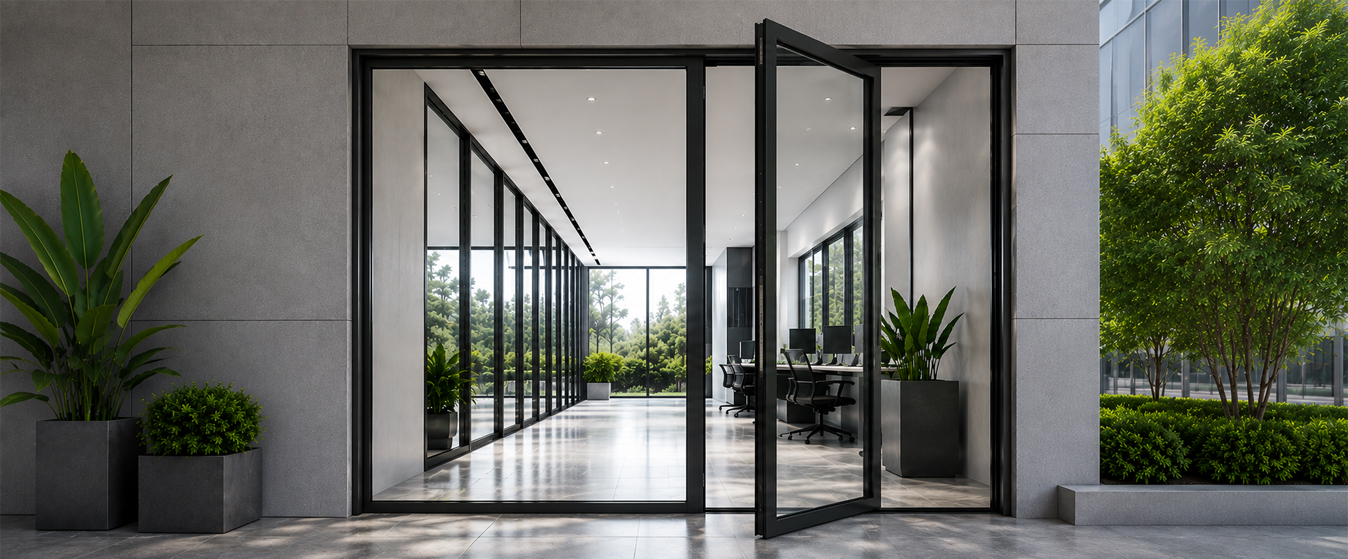
Aluminium casement doors are hinged on one side and open inward or outward. They use an aluminium frame with glass options suited to your requirements for light, privacy, insulation, and noise control.
Their simple operation makes them easy to use, while aluminium provides the strength needed for regular use. Slim profiles and larger glass areas also give you more flexibility in the door design.
Benefits of Aluminium Casement Doors
1. High Strength and Durability
Aluminium gives you a strong frame that can handle frequent opening and closing. It also resists corrosion and holds its shape in changing weather conditions.
The strength of aluminium allows for slim profiles and larger glass panels without affecting the door’s structural support. This works well in homes as well as commercial spaces with higher footfall.
2. Low Maintenance
Aluminium casement doors are easy to maintain. You can clean the frame with a soft cloth, mild soap, and water to remove dust and dirt.
The material does not require frequent repainting, which reduces the upkeep needed over the years. This also makes aluminium doors easier to maintain across offices, hotels, and other larger properties.
3. Better Security
A strong frame and reliable locking system are important for any external door. Aluminium provides a sturdy base for quality hardware and multi-point locking systems, depending on the door system.
You can also choose the glass, locks, hardware and seals according to the level of security you need. This makes aluminium casement doors suitable for entrances, balconies and other access points in homes, offices and commercial buildings.
4. Better Noise Insulation
Traffic, construction and activity outside your building can make indoor spaces noisy. Aluminium casement doors with the right glazing and sealing can reduce the amount of outside noise that enters.
The level of noise reduction depends on the glass, frame, seals and installation. Double glazing and acoustic glass can provide better sound insulation than standard single glazing.
Aluminium casement doors for homes can make the indoor space quieter. Offices, hotels and meeting rooms can also benefit where outside noise affects the space.
5. More Natural Light and Modern Design
Aluminium allows you to use slim frames around larger glass areas. This brings more daylight into your space while keeping the design clean.
You can choose from different finishes, glass types, and configurations to match your interiors and exteriors. Aluminium casement door designs can work across contemporary homes as well as commercial buildings.
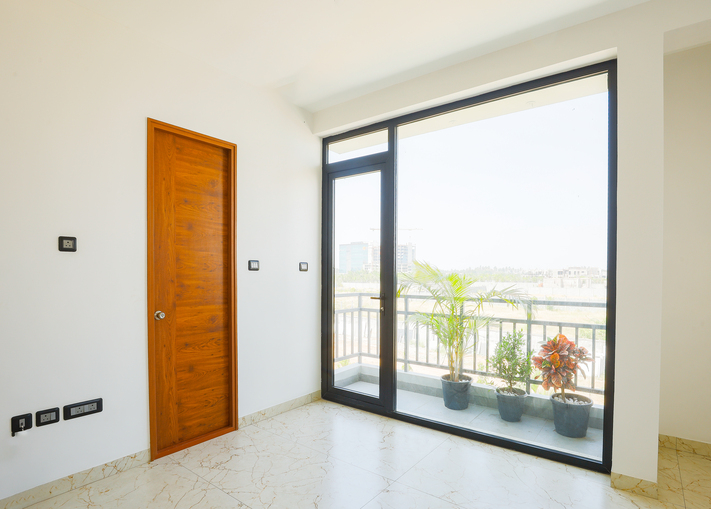
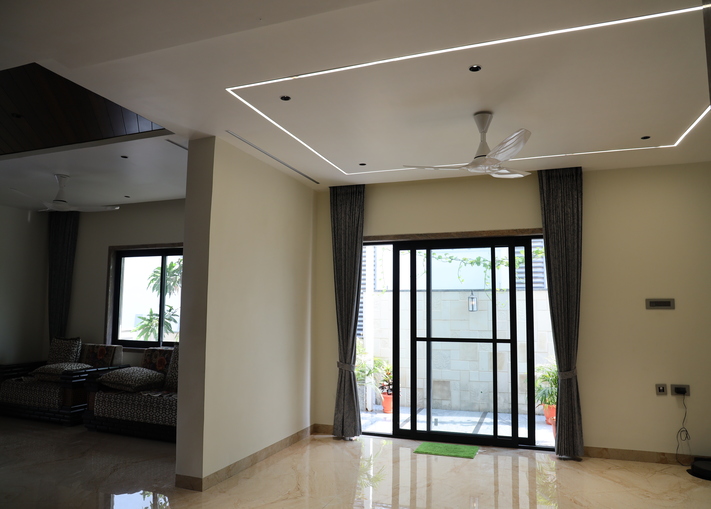
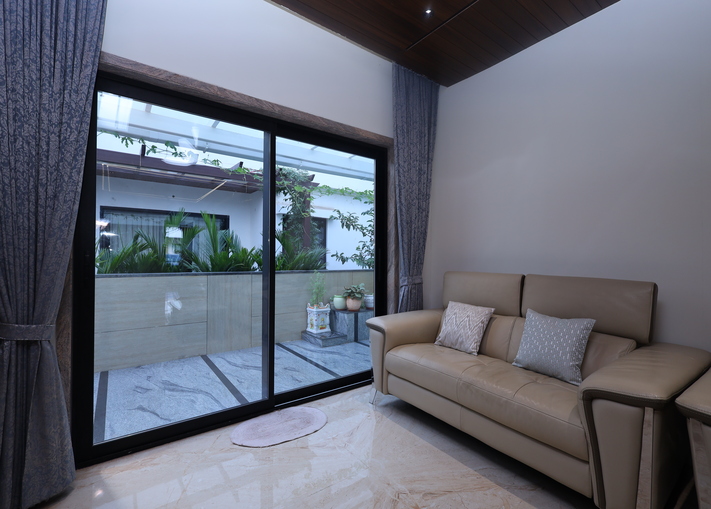
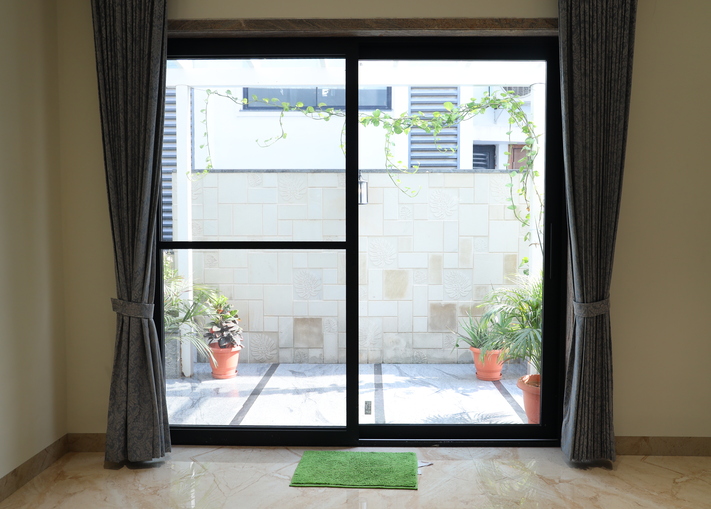
Aluminium glass casement doors are especially useful for living rooms, balconies, and patios where you want more daylight and clear outdoor views. Offices, hotels and restaurants can also use them to create an open, modern look.
Aluminium Casement Doors for Residential and Commercial Spaces
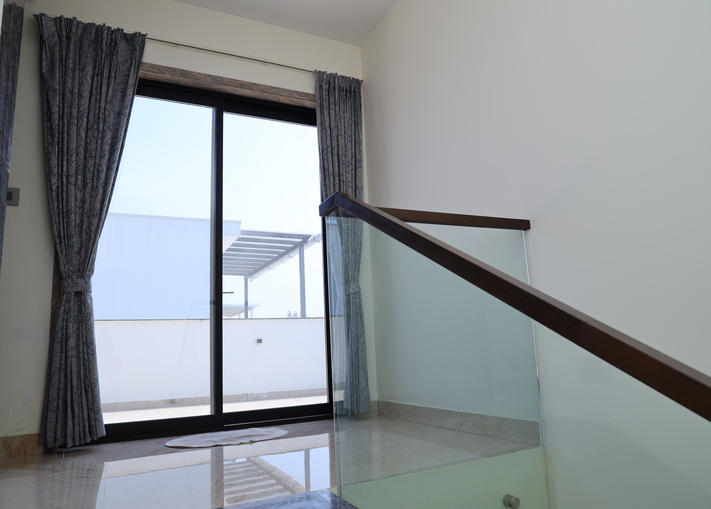
Aluminium casement doors can be used for living rooms, bedrooms, balconies, patio areas and entrances. They have slimmer profiles and larger glass areas so you can bring in more daylight while still maintaining a clear connection with outdoor spaces.
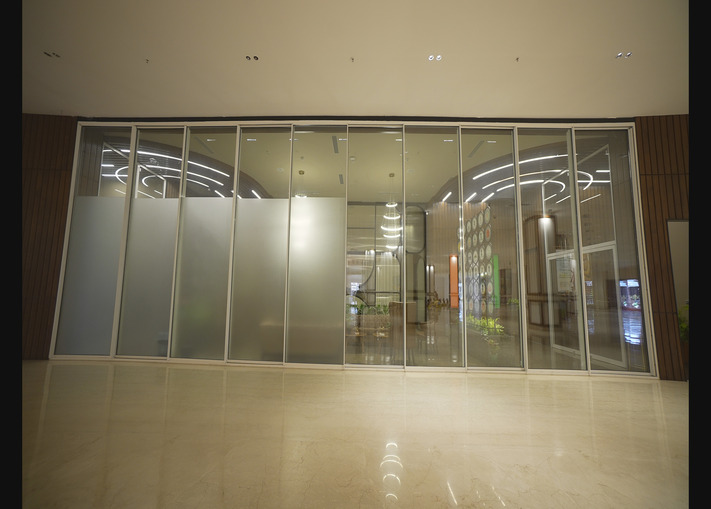
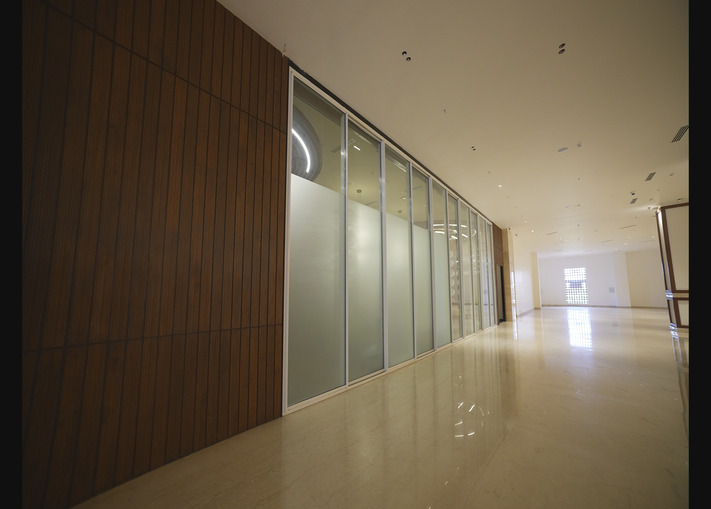
In offices, hotels, restaurants and retail spaces, doors need to handle regular use and remain easy to maintain. Aluminium meets these needs while giving you different options for glass, finishes and configurations.
How to Choose Aluminium Casement Doors?
Before selecting aluminium casement doors for homes, check:
- Opening size: Choose a frame and configuration that can support the size of your opening.
- Glass type: Select the glass based on your needs for noise reduction, insulation, privacy, and daylight.
- Locking system: Look for reliable hardware and multi-point locking if you need higher security.
- Sealing: Good seals help reduce noise and limit air, dust, and moisture from entering.
- Finish: Choose a finish that works with the colour and design of your space.
- Installation: Make sure the door is fitted and sealed correctly to get the expected performance.
Conclusion
Aluminium casement doors offer strength, security, easy maintenance, and more control over noise and indoor comfort. They also feature slim frames and larger glass areas for more daylight and a clean look in your space.
Looking for aluminium casement doors for your home or commercial space? Explore Alteza’s aluminium door solutions and find the right design for your space.
FAQs
Q1. What are the benefits of aluminium casement doors?
Aluminium casement doors offer durability, low maintenance, security, noise insulation, and thermal performance. Slim frames also allow larger glass areas and more natural light.
Q2. Are aluminium casement doors better than wooden doors?
Aluminium casement doors need less maintenance and resist corrosion, warping, and changing weather conditions. They also offer slimmer profiles and more glazing options.
Q3. How much do aluminium casement doors cost?
The cost depends on the door size, aluminium profile, glass, hardware, finish, and installation. Larger openings, specialised glazing and premium hardware can increase the price.
- Double Glazing vs Single Glazing: Which Should You Choose for Aluminium Windows?
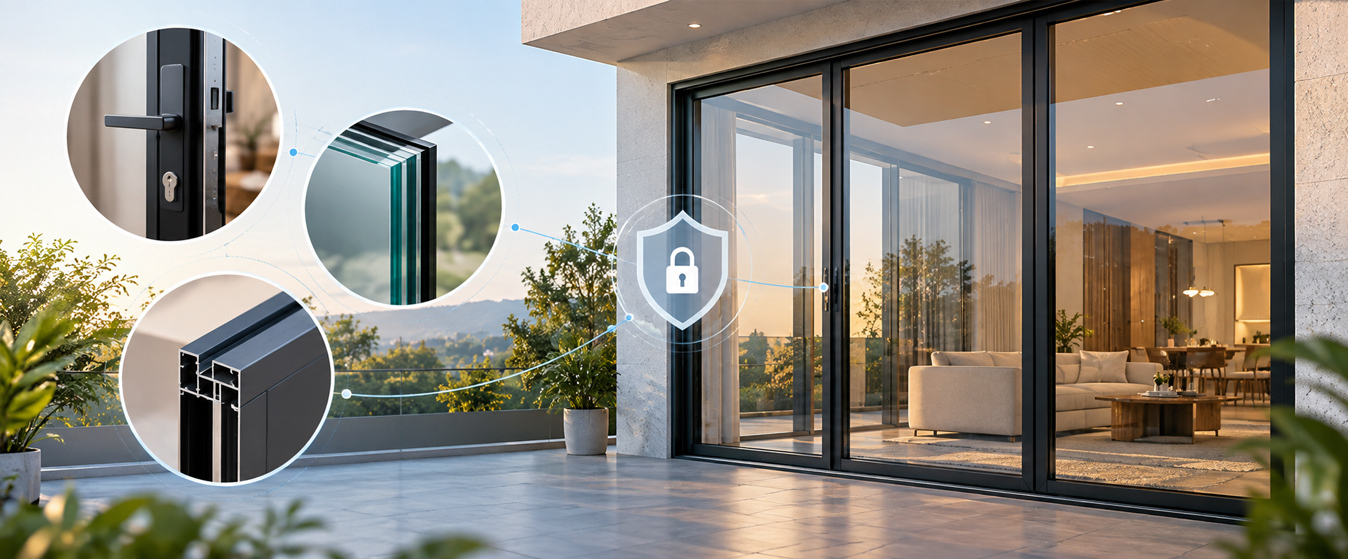
- Are Aluminium Doors Safe for Homes? Security Features to Look For: Locks, Glass, Frames
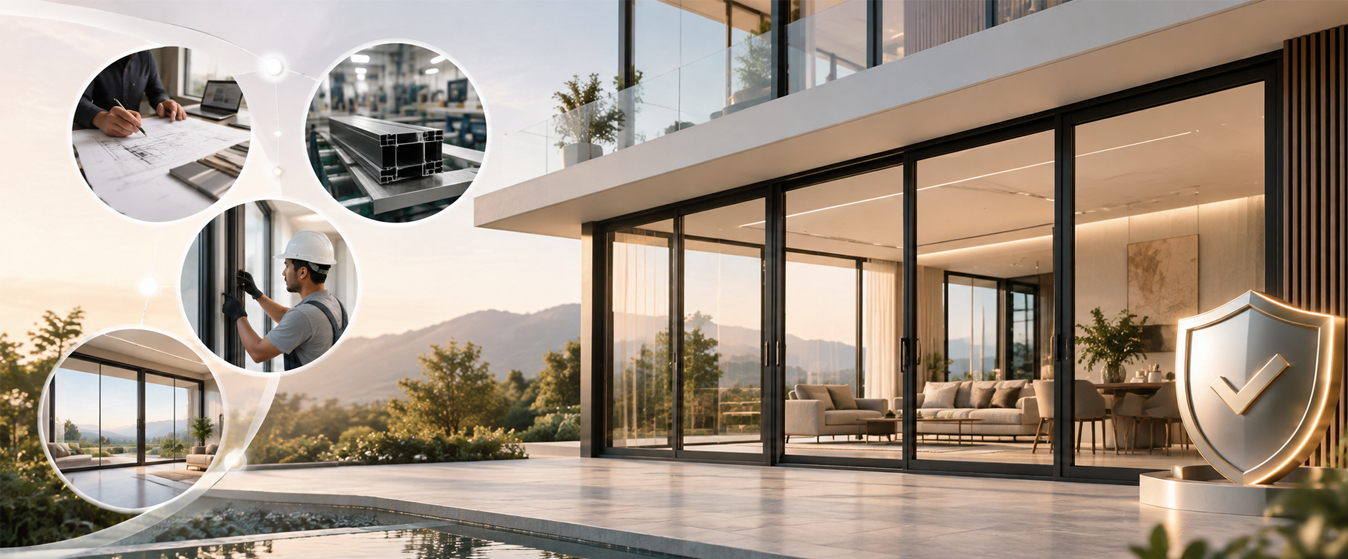
- Why choose Alteza Aluminium windows and doors? End-to-end service & 10 years of warranty
- 10 Best Roof Railing Design Ideas for a Modern & Royal Home

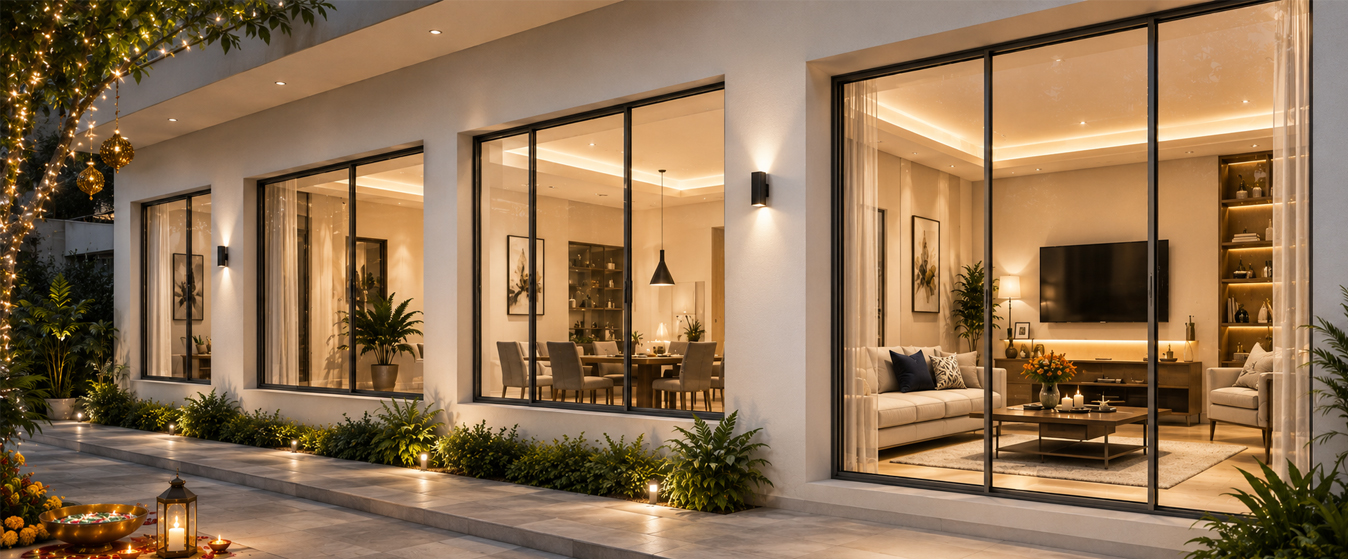
- 10 Premium Aluminium Window Designs to Upgrade Your Home This Festive Season


Related Posts

5 Reasons you need new aluminium windows & doors
Are you considering your options for the right material for your doors and windows? Allow us to make the case for aluminium. Aluminium is also...

Aluminium vs traditional materials
Present day home designs effortlessly merges style with function. It doesn’t just bring along creative applications but widely popularizes the use of non-traditional materials like...

Key considerations for contractors when installing aluminium sliding windows for high floors
Aluminium sliding windows are a popular choice with homeowners and builders alike, thanks to their sleek design, durability, and ease of operation. They offer a...
The Advantages of Aluminium Doors for Home Security
Apart from the looks and functionality, security is a paramount concern for homeowners highlighting the need for stronger doors. As we strive to protect our...

4 Facts You Probably Didn’t Know About Aluminium French Door
Learn 4 suprising facts and myths about aluminium French doors. Find out how aluminium door designs combine durability, natural light, and timeless style for Indian...
A Guide to Choosing the Perfect Aluminium Kitchen Door from Alteza
When it comes to designing your dream kitchen, every detail matters. One crucial element that can significantly impact both aesthetics and functionality is the choice...